Assembly and Machine Languages
Reference documents in Assembly and Machine Languages.
Documents in Assembly and Machine Languages
Page 1 of 2-
MMIX is a RISC computer designed by Don Knuth to illustrate machine-level aspects of programming. In the author's book series "The Art of Computer Programming", MMIX replaces the 1960s-style machine MIX. A particular goal in the design of MMIX was to keep its machine language simple, elegant, and easy to learn. At the same time, all of the complexities needed to achieve high performance in practice are taken into account.
-
This book has been designed as a complete self-contained text for learning programming, using the Z80. It can be used by a person who has never programmed before, and should be of value to anyone using the Z80.
-
This book offers the reader both a detailed description of a sophisticated machine language program (the LADS assembler) and an efficient tool, a complete language with which to write other machine language programs. Every line in the LADS assembler program is described. All the subroutines are picked apart and explained. Each major routine is examined in depth.
-
This book is a very good overview of the basics of 6502 Machine Language. The book starts with an introduction to how computers work, what Binary and Hex are, and how they relate to programing. All the basics are covered with enough detail for a beginner to understand what they are doing.
-
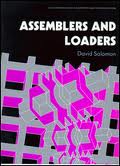
Covering the design and implementation of assemblers and loaders, this comprehensive book opens with an introduction to one-pass and two-pass assemblers. Important concepts such as absolute and relocatable object files are discussed, as are assembler features such as local labels and multiple location counters.
-
This book features a step-by-step approach in covering Assembly language programming of Atmel AVR microcontrollers. It offers a systematic approach in programming and interfacing of the Atmel AVR with LCD, keyboard, ADC, DAC, Sensors, Serial Ports, Timers, DC and Stepper Motors, Opto-isolators, and RTC. Assembly languages are used in all the peripherals programming.
-
The purpose of this text is to provide a simple and free reference for university level programming and architecture units that include a brief section covering MIPS assembly language. The text uses the QtSpim simulator. An appendix covers the downloading, installation, and basic use of the simulator.
-
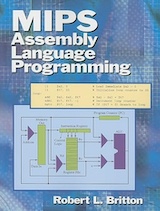
Readers using this text will gain an understanding of how the functional components of modern computers are put together and how a computer works at the machine language level. MIPS architecture embodies the fundamental design principles of all contemporary RISC architectures.
-
A book on programming Windows applications using assembly. The text contains an introduction to console applications and files, a basic Win32 GUI program, popup windows and ownership, child windows, messages, mouse, graphics, etc.
-
What Is This Book About? This book is about the disassembly of x86 machine code into human-readable assembly, and the decompilation of x86 assembly code into human-readable C or C++ source code.
-
Assembly language is as close to writing machine code as you can get without writing in pure hexadecimal. Since it is such a low-level language, it's not practical in all cases, but should definitely be considered when you're looking to maximize performance.
-
This book presents assembly language from the high-level programmer's point of view, so you can start writing meaningful programs within days. The High Level Assembler (HLA) that accompanies the book is the first assembler that allows you to write portable assembly language programs that run under either Linux or Windows with nothing more than a recompile.
-
This book was written to introduce students to assembly language programming in MIPS. As with all assembly language programming texts, it covers basic operators and instructions, subprogram calling, loading and storing memory, program control, and the conversion of the assembly language program into machine code.
-
The purpose of this book is to give the reader a better understanding of how computers really work at a lower level than in programming languages like Pascal. The tutorial has extensive coverage of interfacing assembly and C code and so might be of interest to C programmers who want to learn about how C works under the hood. All the examples use the free NASM (Netwide) assembler. The tutorial only covers programming under 32-bit protected mode and requires a 32-bit protected mode compiler..
-
This is the book that unlocks the secrets of writing superb assembly-language code. It assumes that you're already familiar with assembly language, at least acquainted with the registers and instructions of the 8088, and with the use of one of the popular PC assemblers. We're going to jump into high-performance programming right from the start.