Information Theory and Systems
Reference documents in Information Theory and Systems.
Documents in Information Theory and Systems
Page 1 of 1-
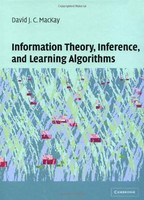
Information Theory and Inference, often taught separately, are here united in one entertaining textbook. These topics lie at the heart of many exciting areas of contemporary science and engineering - communication, signal processing, data mining, machine learning, pattern recognition, computational neuroscience, bioinformatics, and cryptography. financial engineering, and machine learning.
-
The rapid development of new Information Infrastructure combined with the increased user needs in specific areas of Information Technology (mostly related to Web applications) has created the need for designing new modeling techniques more innovative and targeted on specific areas of Information Systems in order to successfully model the rapidly changed environment, along with the newly introduced concepts and user requirements.
-
The development of modern information systems is a demanding task. New technologies and tools are designed, implemented and presented in the market on a daily bases. User needs change dramatically fast and the IT industry copes to reach the level of efficiency and adaptability for its systems in order to be competitive and up-to-date. Thus, the realization of modern information systems with great characteristics and functionalities implemented for specific areas of interest is a fact of our modern and demanding digital society and this is the main scope of this book.
-
This book is designed to help students get a feel for what a career in Management Information System (MIS) would be like. Our students report that they learn more about information systems from their internships than from their IS courses. Consequently, we designed a course that looks very much like an internship�an introduction to the field followed by a substantial project.
-
This book is written as an introductory text, meant for those with little or no experience with computers or information systems. While sometimes the descriptions can get a little bit technical, every effort has been made to convey the information essential to understanding a topic while not getting bogged down in detailed terminology or esoteric discussions.
-
The book is an overview of theoretical and applied informatics. It introduces the reader to the history of information technologies and computer science.
-
This book aims at demonstrating modern roles of Information Theory in a widening array of data science applications, focuses on applications that arise in data science, including social networks, ranking, and machine learning.
-
This book is the final version of a course on algorithmic information theory and the epistemology of mathematics and physics. It discusses Einstein and Goedel's views on the nature of mathematics in the light of information theory, and sustains the thesis that mathematics is quasi-empirical. There is a foreword by Cris Calude of the University of Auckland, and supplementary material is available at the author's web site.
-
This book provides a rigorous treatment of information theory for discrete and continuous systems and a comprehensive treatment of network coding theory with detailed discussions on Linear Network Codes, convolutional network codes, and multi-source network coding.