Miscellaneous and Uncategorized Books
Reference documents in Miscellaneous and Uncategorized Books.
Documents in Miscellaneous and Uncategorized Books
Page 3 of 6-
Typography can enhance your writing. Typography can create a better first impression. Typography can reinforce your key points. Typography can extend reader attention. When you ignore typography, you're ignoring an opportunity to improve the effectiveness of your writing.
-
21 Secrets To Get Motivated - Even If You Are In The Most Difficult Situation! Do you want to know what do high motivated achievers that others don't?
-
This book will help you build a mental framework for clear thinking.
-
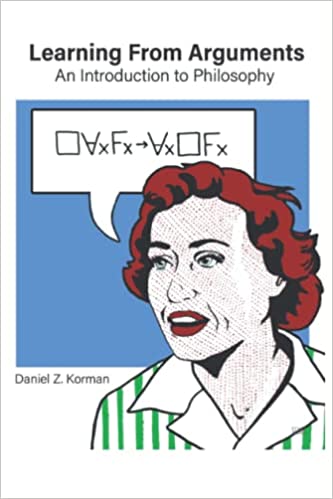
This book advances accessible versions of key philosophical arguments, in a form that students can emulate in their own writing, and with the primary aim of cultivating an understanding of the dynamics of philosophical argumentation.
-
Philosophy is the study of wisdom, and can emerge in our conversations in social media, in school, around the family dinner table, and even in the car. The text uses materials that are 2,500 years old, and materials that were in the news this year.
-
A contemporary examination of what information is represented, how that information is presented, and who gets to participate (and serve as gatekeeper) in the world's largest online repository for information, Wikipedia.
-
The communists of East Central Europe came to power promising to bring about genuine equality, paying special attention to achieving gender equality, to build up industry and create prosperous societies, and to use music, art, and literature to promote socialist ideals.
-
With handy pedagogical features such as maps and illustrations, as well as an extensive list of recommendations for further reading, this book is an important resource for undergraduate and postgraduate courses on Chinese History, and those studuing Chinese Culture and Society more generally.
-
This book is a comprehensive and accessible textbook that helps students understand the key themes of world history within a chronological framework stretching from ancient times to the present day.
-
The book takes a systems approach that recognizes the complexity of our world. It begins by suggesting a set of goals for human societies and identifying innovative strategies for achieving these goals that could gain broad support.
-
This book contains three levels of interactive grammar lessons and reading activities for beginning students of ESOL (English for Speakers of Other Languages). The grammar section includes a select set of YouTube videos, and the three original readers include short picture or chapter stories. Each lesson is accompanied by self-correcting exercises.
-
This book is an inspirational message about what is possible and practical in the name of learning through mobile media. It present stories from a diverse set of educators, a microcosm of the landscape of mobile media learning.
-
This book takes the unique approach of teaching logic through intellectual history; the author uses examples from important and celebrated arguments in philosophy to illustrate logical principles.
-
This open access textbook introduces and defines Digital Humanism from a diverse range of disciplines. Following the 2019 Vienna Manifesto, the book calls for a digital humanism that describes, analyzes, and, most importantly, influences the complex interplay of technology and humankind, for a better society and life, fully respecting universal human rights.
-
What does the Wikipedia know, and how can it know it? More to the point, how can anyone using an anonymously edited source, the contents of which change on a daily basis, know that what they are reading constitutes knowledge? In this provocative challenge to contemporary concepts of objectivity, four figures of knowledge – the Wikipedia, scientific experiments, anonymous peer review, and school education – are investigated in order to question the way we understand the world around us.