Python Programming
Reference documents in Python Programming.
Documents in Python Programming
Page 7 of 9-
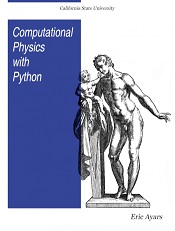
The use of computation and simulation has become an essential part of the scientific process. Being able to transform a theory into an algorithm requires significant theoretical insight, detailed physical and mathematical understanding, and a working level of competency in programming.
-
This book presents computer programming as a key method for solving mathematical problems. There are two versions of the book, one for MATLAB and one for Python. The book was inspired by the Springer book TCSE 6: A Primer on Scientific Programming with Python (by Langtangen), but the style is more accessible and concise, in keeping with the needs of engineering students.
-
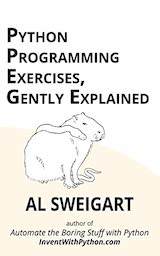
This is the perfect book for beginner and intermediate programmers who want to test their Python skills but aren’t ready to begin professional-level software development. The 42 programming exercises in this book let you practice what you've learned.
-
This book demonstrates how to combine different libraries and frameworks to build amazing things. It picks up where the complete beginner books leave off, expanding on existing concepts and introducing new tools that you'll use every day.
-
If you've mastered basic Python syntax and you’re ready to start writing programs, you'll find this book both enlightening and fun. This collection of 81 Python projects will have you making digital art, games, animations, counting programs, and more right away. Once you see how the code works, you’ll practice re-creating the programs and experiment by adding your own custom touches.
-
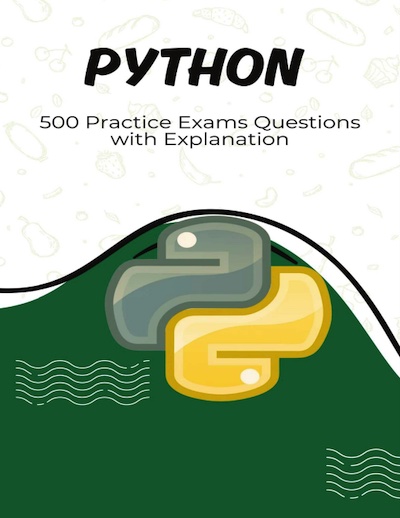
This is a comprehensive practice guide designed to help learners, job seekers, and developers solidify their Python programming skills through 500+ multiple-choice questions (MCQs). Spanning foundational topics to advanced object-oriented programming, etc.
-
The book describes the basic elements of writing clean code and how it plays an important role in Python programming. You will learn about writing efficient and readable code using the Python standard library and best practices for software design.
-
You know how to program in Python but are interested in what goes on under the covers of the interpreter? Well, fasten your seat-belts as this book will take you on a tour of the virtual machine that runs your Python code.
-
More than a mere collection of advanced syntax and masterful tips for writing clean code, you'll learn how to advance your Python programming skills by using the command line and other professional tools like code formatters, type checkers, linters, and version control.
-
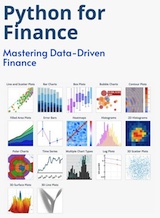
Looking to enhance your skills in Economics and Finance? Dive into Python programming! With libraries like Pandas, NumPy, and Matplotlib, you can analyze data, build models, and visualize trends like never before.
-
Unlock the full potential of Python in the world of finance. This comprehensive guide is your gateway to mastering the powerful capabilities of Python to revolutionize financial analysis and investment strategies.
-
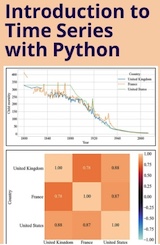
Build real-world time series forecasting systems which scale to millions of time series by applying modern machine learning and deep learning concepts. Perform time series analysis and forecasting confidently with Python.
-
Unlock Python's potential in cyber defense and arm yourself with the knowledge to safeguard against digital threats. Simplify complex cybersecurity concepts while equipping you with the skills to analyze, understand, and defend against ever-evolving cyber threats.
-
This book is a concise introduction to software design using the Python programming language. Intended for people with no programming experience, this book starts with the most basic concepts and gradually adds new material. Some of the ideas students find most challenging, like recursion and object-oriented programming, are divided into a sequence of smaller steps and introduced over the course of several chapters. The focus is on the programming process, with special emphasis on debugging.
-
The goal of this book is to teach you to think like a computer scientist. This way of thinking combines some of the best features of mathematics, engineering, and natural science.