Social Media and Social Networks
Reference documents in Social Media and Social Networks.
Documents in Social Media and Social Networks
Page 1 of 1-
This is a unique lesson-based book that walks you through the essential parts of WordPress. Each lesson is streamlined to teach a specific aspect of WordPress, helping you to focus on just what you need in order to get the task accomplished. If you learn better visually, this book provides you with a video to accompany each lesson.
-
This book is a condensed resource of best practices for and by WordPress developers, intended to fast track developers past common mistakes and painful problems.
-
The practice of using a social network to establish and enhance relationships based on some common ground shared interests, related skills, or a common geographic location is as old as human societies, but social networking has flourished due to the ease of connecting on the Web. This OCLC membership report explores this web of social participation and cooperation on the Internet and how it may impact the library's role, including:
-
With this guide, you'll figure out what to say as you use Twitter to enrich your life and your business. It walks you through all the opportunities available with this social networking tool. You'll quickly gain a strong understanding of the Twitter landscape and begin tweeting like a pro.
-
This book is an introduction to the future of mass media and mass communications - cross-media communications. Cross-media is explained through the presentation and analysis of contemporary examples and project-based tutorials in cross-media development. The text introduces fundamental terms and concepts, and provides a solid overview of cross-media communications, one that builds from a general introduction to a specific examination of media and genres to a discussion of the concepts involved in designing and developing cross-media communications.
-
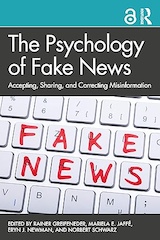
The book examines the phenomenon of fake news by bringing together leading experts from different fields within psychology and related areas, and explores what has become a prominent feature of public discourse since the first Brexit referendum and the 2016 US election campaign.
-
This book explores how social media adoption by terrorists interacts with privacy law, freedom of expression, data protection and surveillance legislation through an exploration of the fascinating primary resources themselves, covering everything from the Snowden Leaks, the rise of ISIS to Charlie Hebdo.
-
This book introduces a new mechanism for representing social networks in which pairwise relationships can be drawn from a range of realistic possibilities, including different types of relationships, different strengths in the directions of a pair, positive and negative relationships, and relationships whose intensities change with time.
-
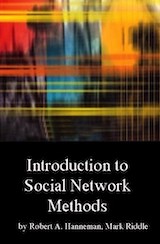
This textbook introduces many of the basics of formal approaches to the analysis of social networks. The text relies heavily on the work of Freeman, Borgatti, and Everett (the authors of the UCINET software package). The materials here, and their organization, were also very strongly influenced by the text of Wasserman and Faust, and by a graduate seminar conducted by Professor Phillip Bonacich at UCLA. Many other users have also made very helpful comments and suggestions based on the first version.
-
Online communities offer a wide range of opportunities today, whether you're supporting a cause, marketing a product or service, or developing open source software. The Art of Community will help you develop the broad range of talents you need to recruit members to your community, motivate and manage them, and help them become active participants.
-
The book explores the use of digital methods to study false viral news, political memes, trolling practices and their social life online. It responds to an increasing demand for understanding the interplay between digital platforms, misleading information, propaganda and viral content practices, and their influence on politics and public life in democratic societies.
-
Can computer science solve our social problems? With Discourses on Social Software Jan Van Eijck and Rineke Verbrugge suggest it can, offering the reader a fascinating introduction to the innovative field of social software. Compiling a series of discussions involving a logician, a computer scientist, a philosopher, and a number of researchers from various other academic fields, this collection details the many ways in which the seemingly abstract disciplines of logic and computer science can be used to analyze and solve contemporary social problems.