Wireless Communications and Mobile Computing
Reference documents in Wireless Communications and Mobile Computing.
Documents in Wireless Communications and Mobile Computing
Page 2 of 2-
Describes the latest research in applying signal processing methodologies in the context of emerging and future wireless applications, such as next-generation cellular telephony, nomadic computing, and wireless media.
-
Inexpensive and rapid computational power provided powerful tools to overcome the limitations of current technologies and enabled us to apply several advanced statistical signal processing techniques for the design of receivers in wireless communications systems. In this presentation, we first mention the knowledge gaps in general. Then, we briefly explain two techniques, namely, the expectation maximization (EM) and its modified version called the space-alternating generalized expectation maximization (SAGE) algorithm and the Monte Carlo Markov Chain (MMCC) technique based on the Gibbs Sampling algorithm.
-
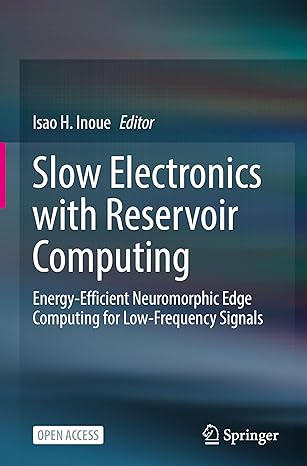
This open access book discusses “slow electronics”, the study of devices processing signals with low frequencies. Computers have the remarkable ability to process data at high speeds, but they encounter difficulties when handling signals with low frequencies of less than ~100Hz.
-
The past decade has seen many advances in physical layer wireless communication theory and their implementation in wireless systems. This textbook takes a unified view of the fundamentals of wireless communication and explains the web of concepts underpinning these advances at a level accessible to an audience with a basic background in probability and digital communication.
-
It offers comprehensive, self-contained knowledge on Mobile Edge Computing (MEC), which is a very promising technology for achieving intelligence in the next-generation wireless communications and computing networks.