Physics, Computational Physics, and Mathematical Physics
Reference documents in Physics, Computational Physics, and Mathematical Physics.
Documents in Physics, Computational Physics, and Mathematical Physics
Page 1 of 2-
The fourth edition of this well-established, highly regarded two-volume set continues to provide a fundamental introduction to advanced particle physics while incorporating substantial new experimental results, especially in the areas of CP violation and neutrino oscillations.
-
This book familiarizes readers with what is considered tested and accepted and in so doing, gives them a grounding in particle physics in general. It takes an historical approach showing how the model is linked to the physics that most of us have learned in less challenging areas.
-
This motivating textbook gives a friendly, rigorous introduction to fundamental concepts in equilibrium statistical mechanics, covering a selection of specific models, including the Curie–Weiss and Ising models, the Gaussian free field, O(n) models, and models with Kać interactions. Using classical concepts such as Gibbs measures, pressure, free energy, and entropy, the book exposes the main features of the classical description of large systems in equilibrium, in particular the central problem of phase transitions.
-
These notes cover classical mechanics and special relativity at a level of sophistication beyond the introductory sequence. You will learn a variety of new techniques and formalism that will allow you to attack a wider set of problems than you saw in the introductory sequences as well as provide you a deeper, more unified understanding of the structure and fundamental principles of classical physics.
-
This book provides a reference guide to the topics covered in most introductory physics courses. This book is geared towards students in a college-level introductory physics class, but can be used at the high school level. Topics covered include conservation laws, dynamics, electricity and magnetism, and topics in 20th and 21st century physics. Each chapter includes a brief outline of the key concepts, applications, and equations, and a series of problems to be solved. Answers to selected problems are also available.
-
This is a very well illustrated book, with most of the illustrations in color, and is a compilation of articles written by authorities in the relevant area(s) that is meant for the generally educated public. Reader will find a virtual cornucopia of optical subject matter!
-
This book is a comprehensive reference book for graduate students and an invaluable guide for more experienced researchers. It provides an introduction to nuclear fusion and its status and prospects, etc.
-
Providing integrated coverage of accelerator science and technology, this book presents the fundamental concepts alongside detailed engineering discussions and extensive practical guidance, including many numerical examples.
-
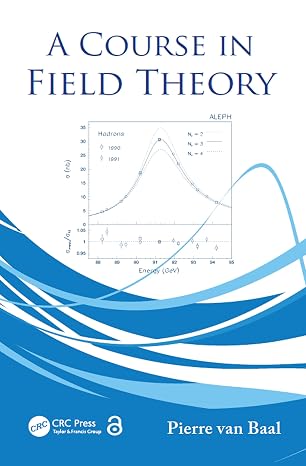
The text gives students working knowledge and an understanding of the theory of particles and fields, with a description of the Standard Model toward the end. It explains how Feynman rules are derived from first principles, an essential ingredient of any field theory course.
-
This open access textbook introduces beginning undergraduate students and high school students to the world of quantum mechanics and atomic spectroscopy. Requiring no previous knowledge of physics and no math beyond basic algebra and sines and cosines, this book focuses on concepts to make the excitement of atomic physics more accessible for learners than ever before.
-
This open access book explores the interplay of science and the humanities to convey the wonder and excitement of scientific development throughout the ages. Beautifully illustrated, accurate in its scientific content and broad in its historical and cultural perspective.
-
Ranging from the most basic principles of Newtonian physics through such formidable theories as general relativity and quantum mechanics, Feynman's lectures stand as a monument of clear exposition and deep insight.
-
Two dramatically different philosophical approaches to classical mechanics were proposed during the 17th – 18th centuries. Newton developed his vectorial formulation that uses time-dependent differential equations of motion to relate vector observables like force and rate of change of momentum. Euler, Lagrange, Hamilton, and Jacobi, developed powerful alternative variational formulations based on the assumption that nature follows the principle of least action. These variational formulations now play a pivotal role in science and engineering.
-
This book is served as a reference text to meet the needs of advanced scientists and research engineers who seek for their own computational fluid dynamics (CFD) skills to solve a variety of fluid flow problems. Key Features: - Flow Modeling in Sedimentation Tank, - Greenhouse Environment, - Hypersonic Aerodynamics, - Cooling Systems Design, - Photochemical Reaction Engineering, - Atmospheric Reentry Problem, - Fluid-Structure Interaction (FSI), - Atomization, - Hydraulic Component Design, - Air Conditioning System, - Industrial Applications of CFD
-
This book presents a unified new approach to computational simulation of turbulent flow starting from the general basis of calculus and linear algebra. The book puts the Body and Soul computational finite element methodology in the form of General Galerkin (G2) up against the challenge of computing turbulent solutions of the inviscid Euler equations and the Navier-Stokes equations with small viscosity. This is an outstanding textbook presenting plenty of new material with an excellent pedagogical approach.